Site-Backyard
Date-May 29, 2008
Time- 6:21 P.M.
Temp-51 degrees
Weather Conditions-partly cloudy
Wind Conditions-slightly Breezy
Soil Conditions-very moist
Hypothesis-start to heat up and become less wet
Notes-At the moment it is raining off and on. Maybe continue to rain later tonight. This will benefit the vegitation of the area which will provide more foods sources to local organisms and potentially bring other or different organisms to this area. I have noticed that the male frogs are brownish green and are slightly larger. I have also noticed that the female frogs are smaller and blend into there habitat better than the males. The female organisms blend into there enviornment better than the males to hide from predators since they may be carrying offspring so there can be baby frogs. The males are brighter in color than the females. Tons more frogs are starting to appear in my pond. This could mean that the water has pulled them through to a different enviornment. Also that the water is starting to form algae and that attracts the frogs.
Thursday, May 29, 2008

Observation #7
Site-Backyard
Time- 5:38 P.M.
Temp.- 57 degrees
Wind Conditions-somewhat of a breeze every once and awhile
Works Cited
"Aspen Trees." www.google.com. 25 Apr. 2008. 28 May 2008 http://www.2020site.org/trees/aspen.html.
"Aspen." www.google.com. May-June 2008. Trees for life. 10 May 2008 http://www.treesforlife.org.uk/tfl.aspen.html.
Autumn Foliage and tree trunks of quaking aspen trees in he crested butte area of Colorado <http://imagecache2.allposters.com/images/pic/NGSPOD05/111392~Autumn-Foliage-and-Tree-Trunks-of-Quaking-Aspen-Trees-in-the-Crested-Butte-Area-of-Colorado-Posters.jpg>
Ivory, A. 2002. "Cygnus olor" (On-line), Animal Diversity Web. Accessed May 29, 2008 at http://animaldiversity.ummz.umich.edu/site/accounts/information/Cygnus_olor.html.
"Mute Swans." www.google.com. 25 Apr. 2008. roots web. 27 May 2008 http://freepages.genealogy.rootsweb.ancestry.com.
Mute Swan 01, May 12,2008<http://www.birdsofoklahoma.net/images/MuteSwan01.jpg>
"Aspen." www.google.com. May-June 2008. Trees for life. 10 May 2008 http://www.treesforlife.org.uk/tfl.aspen.html.
Autumn Foliage and tree trunks of quaking aspen trees in he crested butte area of Colorado <http://imagecache2.allposters.com/images/pic/NGSPOD05/111392~Autumn-Foliage-and-Tree-Trunks-of-Quaking-Aspen-Trees-in-the-Crested-Butte-Area-of-Colorado-Posters.jpg>

Ivory, A. 2002. "Cygnus olor" (On-line), Animal Diversity Web. Accessed May 29, 2008 at http://animaldiversity.ummz.umich.edu/site/accounts/information/Cygnus_olor.html.
"Mute Swans." www.google.com. 25 Apr. 2008. roots web. 27 May 2008 http://freepages.genealogy.rootsweb.ancestry.com.
Mute Swan 01, May 12,2008<http://www.birdsofoklahoma.net/images/MuteSwan01.jpg>
Wednesday, May 21, 2008
Aspen Trees
 Aspen Trees, Populus Tremuloices, need lots of preparation. Aspen prefer light soils, that are acidic and drain well. The Aspen is not usually a large tree. And is frequently found on damp hillsides, rocky valley bottoms, and hedges. It will grow in a wide range of different soils but loves moisture and light. It is a deep rooted tree that is not damaged by frost but cannot tolerate too much heat. The five typical aspens are distinguished from each other by leaf size and the size and spacing of the teeth on the adult leaves. Aspen trees are a fast growing and generally short lived tree, the light, soft wood has very little shrinkage (the loss of products) and high grades of aspen are used for lumber and wooden matches.
The Latin name means trembling poplar. The technical term for this is ‘dioecious’(A plant species is said to be dioecious when its male and female reproductive organs are carried on separate individual plants of the same species). Aspen trees are affected by numerous insects, diseases and cultural problems. These are short-lived trees. In the urban landscape, even properly cared-for aspen may not reach 20 years. Their life spans can be shortened further by one or more of several insects or diseases that attack aspen trees. Fungal diseases, such as Cytospora or other cankers which attack the trunk, are common, along with leaf spots. Aspens are very sensitive to many environmental problems and are host to more than five hundred species of parasites, berbivores, diseases, and other harmfull things. Aspen has been a problem to many, when planted in the landscape. Many of them die right from the begining.
The aspen has a broad open crown, lightly branched with twisting branches. The lower branches are often horizontal. The shoots are tiny and deep brown, and the leaf buds yellow and deep brown and slightly sticky. The leaves are almost circular, with large rounded teeth and taper to a small point. Aspen is a member of the willow family, and like all willows it has separate male and female trees. The bark is grey-green getting darker as the tree gets older. It is ridged in older trees. The height of aspen trees are 20 to 30 metres tall. Aspens are found all over Europe, North Africa, Turkey and Siberia. Many kinds of wildlife benefit from the foliage, twigs and buds of this tree. The aspen tree provides food and habitat for a variety of wildlife. For example black bear, deer, beaver, porcupine, elk, moose, and many smaller birds and animals, including small mammals such as mice, voles, shrews, chipmunks, and rabbits. The leaves provide nutrients. Leaves conduct photosynthesis but gets nutrients and water from the giant root system.
Observation #6
Site-Backyard
Date- May19, 2008
Time- 6:15 P.M.
Temp- 48 degrees
Weather Conditions-Stormy/ rainy
Wind Conditions-Very windy. Rain turned into heavy wet rain and kind of a hail
Soil Conditions-Soil should be very damp kind of like moist. It should really start to make the grass and organisms living it grow or sprout.
Hypothesis- Grass will be alot greener by the end of the week
Notes- A healthy soil enviornment is starting to form. A healthy soil enviornment is dependant on a combination of factors. For instance structure, mineral content, and PH along with decomposing bioforms. The rain wont really make the grass grow right off the bat, because all of the minerals and soil organisms have to sprout and start over again. Photosynthesis depends on the sun and on the soil organisms that are living. Grass is a living organism because it goes through a growing cycle each year. They reproduce by developing small flowers that produce spores. That part of the cycle is starting right now. The spores pollinate other flowers, which produces seeds. The rain that has been falling within this week will help produce the seeds to start growing again. New organisms are starting to invade the new territorys and making places to live for the moment.
Tuesday, May 20, 2008
Observation #5
Site- Backyard
Date- May19, 2008
Time- 5:36 P.M.
Temp-38 degrees
Weather Conditions-Hot
Wind Conditions- not much wind but a slight breeze
Soil Conditions-drying up because of all the hot weather which dries the soil out.
Hypothesis-going to rain throughout the week
Notes-Very hot out outside. looks kind of cloudy and looks liek its going to rain. The rain will help the vegitation and animals. Soil will be very healthy and start to produce plants and flowers.
Monday, May 19, 2008
Observation #4
Site-Backyard
Date-May 16,2008
Time-6:33 P.M.
Temp-43 degrees
Weather-very warm and hot outside. Clouds were mainly gone and weather is getting hotter and hotter everyday. Grass is starting to fill in the dead parts. water has risen and the water flow is heavier.
Wind Conditions-breezy but not high winds
Soil Conditions-healthier and more grass is forming in all the dead areas.
Hypothesis-higher weather temperatures within the week
Notes-alot more birds are comign out. Many elk and buffalo crossing the streets to the feeding grounds. Clouds have all gone away and makes it warmer so the sun can peak through. water flow is very much heavier.Frogs are starting to croak and appear during the nights which means there habitat is back again.
Wednesday, May 14, 2008
Observation #3
Site-Backyard
Date-May 12, 2008
Time-7:23 P.M.
Temp. 38 degrees
Weather-warmer and the sun has melted the majority of the snow, barely any left. Rain sprinkled a little which caused a slight chill.
Wind Conditions- Medium winds through the valley.
Soil Conditions- snow is still melting and its giving the grass and land fresh waters and minerals. That is helping vegitation alot.
Hypothesis- little flowers will start to grow by next week.
Notes-Tons more birds flying around. I am starting to see way more animals like buffalo and elk. They are and have been eating all the new growth that has been growing in the fields. Skys are nice and clear blue. That meens that it is a little colder outside and hints to us that we are going to have warmer weather soon. Fish have been jumping out of the surface of the water and have been swimming closer to the surface. Which says that there is vegitation in the water and they are coming to the surface to eat there foods. Spots in the grass like patches and it is very dead grass. water is low
Monday, May 12, 2008
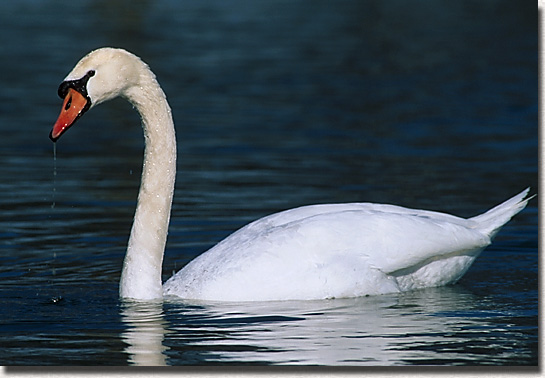
Mute Swans

Swans are birds of the family Anatidae, which also includes geese and ducks. Swans are grouped with related geese in the other family Anserinae. Swans usually mate for life, swans have a type of divorce which sometimes occurs, mainly because of nesting failure. The number of eggs in each nest ranges from three to eight eggs. The word "swan" is taken from Old English word swan, just like the German Schwan and the Dutch zwaan, from the Indo-European root swen which meens to sound, to sing. Young swans are known as cygnets, from the Latin word for swan. An adult male is a cob which meens leader of a group. An adult female is a pen.
Swans are highly intelligent and remember who has been kind to them, or not. There behavior is they respond in kind and gentle ways. They do not usually attack people, and will only bite if they feel threatened. They are more aggressive during the nesting season because they need to protect their nest and eggs. Nesting season usually starts in March and lasts a few months until they can go off on there own. Mute swans have sharp vision and hearing. Although they don’t have a call they have a variety of sounds to get across there emotions. For example they do a gentle bleating noise. also a head to tail long snort sometimes along with them raising there heads and feathers and start to become fluffed, to tell that they are happy. If you want to tell if they are a male from a female you have to pay close attention to there feathers and colors. They look alot alike, but if you look close, you can tell one from the other. First of all males are larger than the females. Also the neck of a male is thicker than the neck of a female.
The Northern Hemisphere species of swan have pure white feathers, but the Southern Hemisphere species are mixed black and white. The Australian Black Swan (Cygnus atratus) is completely black except for the white feathers on its wings, and the South American Black-necked Swan has a black neck. The legs of swans are dark blackish grey. The bill color can often vary. The four main species have black bills with different amounts of yellow, and all the others are patterned red and black. The Mute Swan and Black-necked Swan have a lump at the base of the bill on the upper part of there head.
Mute swans weigh from 6.5 – 13 kg (14 – 30 pounds), are about 160 cm (5 feet) long and can have a wingspan up to 2.5 meters (8 feet). A swan has about 25,000 feathers. Swans in a protected environment might live as long as 30 years max. Swans eat aquatic vegetation and insects, even tiny fish and tadpoles. They are not in competition with ducks and smaller water animals for food. They actually help the smaller birds when parts of plants they’re eating float to the surface.
Evidence says that the genus Cygnus evolved in Europe or western Eurasia during the Miocene, spreading all over the Northern Hemisphere until the Pliocene. When the southern species branched off and its not known. The Mute Swan apparently is closest to the Southern Hemisphere Cygnus and its habits of carrying the neck curved (not straight) and the wings fluffed (not flush) as well as its bill color and knob show that its closest living relative is actually the Black Swan. Swans eat lots of grass in the waters and spend lots of there time in the water.
Thursday, May 8, 2008
Observation #2
Site-Backyard
Date-May 7, 2008
Time-7:35 P.M.
Temp. 41 degrees
Weather- sunny during the day then got very cloudy which caused it to rain which caused slight fludding in some areas.
Wind Conditions- wind stopped after the rain started to fall. After rain ended later there was a slight breeze
Soil Conditions-Rain helped vegitation alot. helped the flowers and trees start to growing. It dampened the soil and caused certain areas to be muddy.
Hypothesis- Grass will become alot greener and lots more vegitation will form by next week?
Notes-Lots more birds and animals starting to appear. Snow is practically gone and that means it melted so the water will help the grass and wildlife. It also rained that will help all sorts of animals. Since water is melting which is causing drout it will push underground animals out to the surface and we will be seeing all different types of animals and plant life. Birds appearing all over and eating more food some nesting in trees and finding places to live.
Wednesday, May 7, 2008
Observation #1
Site-My Backyard
Date-May 6, 2008
Time-7:00P.M.
Temp. 43 degrees
Weather-slightly cloudy-light drizzled rain-ice and snow starting to melt very damp and wet in grass areas-dirt starting to show on cleared areas- vegetation starting to form-trees starting to grow again
Wind Conditions-slight breeze every now and then-calms down and heats up pfrom sun
Soil Conditions- getting damper and starting to produce healthy grass and flowers when all snow is gone
Hypothesis-flowers start growing and healthy grass comes up in about a week?
Notes- Deer ran through yard-starting to migrate. Deer droppings through-out yard. Temperature is warming up over the weeks. More and more snow melting everyday. Birds feeding off of bird feeders and starting to come back. More growth all the time. Cat starting to hunt outside again and bring in mice and varmits. Pond starting to fill up and flow again.
Subscribe to:
Posts (Atom)